
Early years, UAE
What is changing in how UAE parents choose toys for the first three years
Walk through any nursery in Dubai or Abu Dhabi and something has shifted. Screens are moving to the edges of the room, and baskets of textured blocks, silicone teethers, wooden shapes and soft fabric cubes are back in the middle. Paediatricians and Early Childhood Development specialists across the Emirates keep repeating the same point to new parents: in the first years of life, a child learns the world through their hands and skin far more than through a screen. Touch is not a nice extra. It is the main channel.
A tactile toy is any toy designed to be felt: bumpy, smooth, warm, cool, squishy, rigid, light, heavy. When a baby squeezes a soft ball, pours rice from one cup to another, or runs their fingertip along a ridged wooden ring, they are doing serious developmental work. This article looks at four clear trends shaping how families in the UAE approach tactile play today, and where things are heading.
Trend 1
Sensory-first play is replacing screen-first play
The strongest shift in UAE parenting circles over the last few years is the pushback against early screen exposure. The World Health Organization guidance recommends no screen time at all for children under two, and very limited exposure after that. Parents are looking for a real alternative, and tactile toys fit the gap.
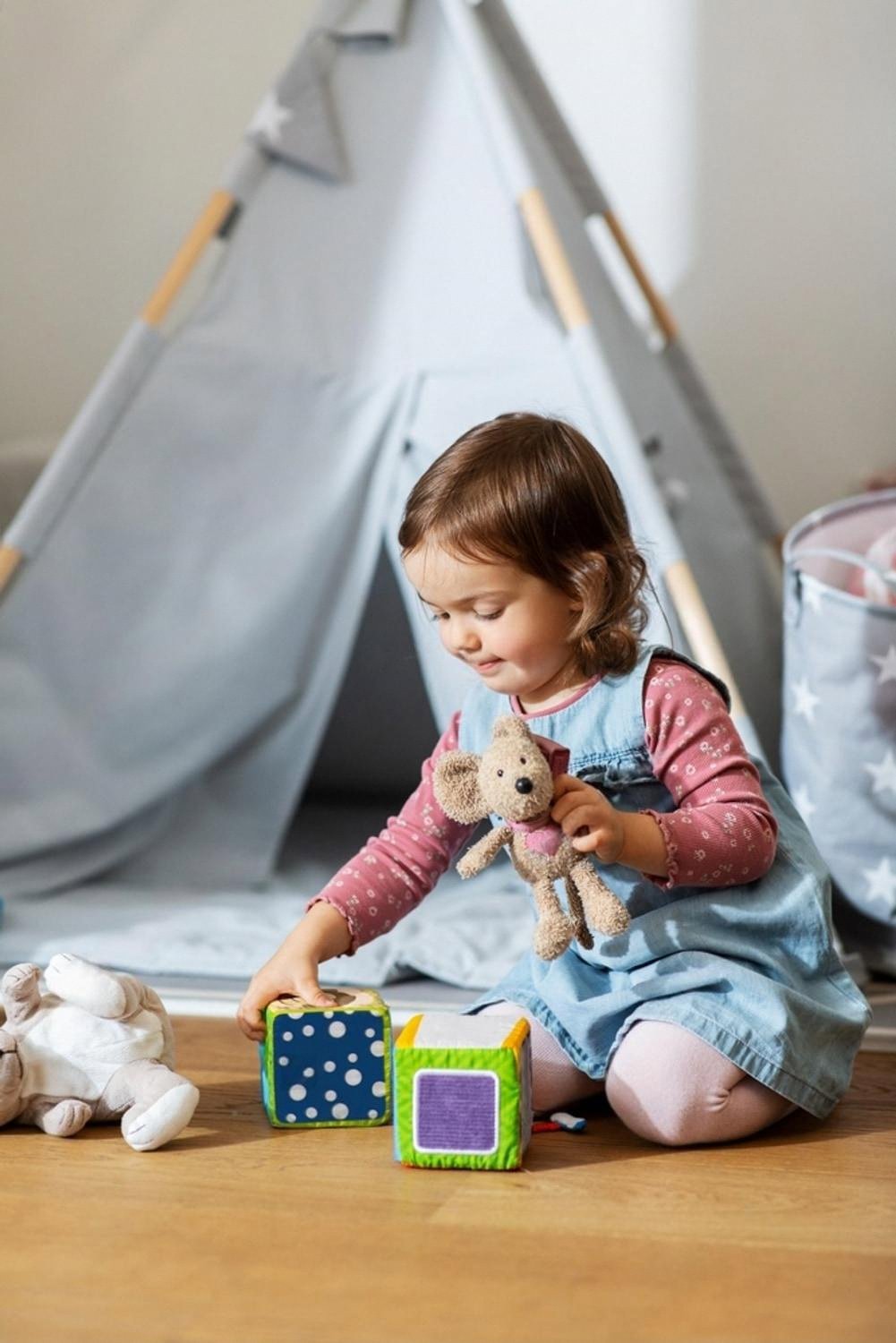
- Textured blocks and fabric cubes that combine soft sides, crinkle panels and mirror inserts.
- Wooden rattles and grasping toys that have weight and a natural grain the child can feel.
- Silicone sensory balls with different surface bumps for tummy time.
- Sand and water trays for supervised pouring, scooping and sifting from about 18 months.
The pattern is the same across price points, from home-play brands to boutique wooden pieces sold in Al Wasl and Riyadh. Parents want a child who can sit on the floor and be absorbed for twenty minutes by an object that does nothing but feel interesting in the hand.
Trend 2
Fine motor skills are getting more attention in nurseries
Nursery curricula in the UAE, both KHDA-registered centres in Dubai and ADEK-licensed ones in Abu Dhabi, are putting more weight on hand strength and finger control before formal writing begins. Tactile toys are the everyday tool that gets them there.
Fine motor development is the coordination of the small muscles in the hand and fingers. It sounds narrow, but it underpins holding a pencil, using cutlery, buttoning a shirt and later, writing Arabic script or English letters with control. A child who has spent hundreds of hours squeezing a soft ball, pinching beads, threading rings on a peg and pouring lentils between two cups arrives at that first pencil with an already trained hand.
Occupational therapists in the region often tell parents the same thing: buy fewer flashing toys, buy more things a child can pick up, drop, stack, sort and squeeze. This is where thoughtfully made children’s toys earn their place, the pieces are sized for tiny hands and built to survive constant mouthing and grabbing.
Trend 3
Texture play is being used to build vocabulary
A quieter trend, but a powerful one, is the link parents are making between texture and language. When a toddler holds a smooth stone in one hand and a rough sponge in the other, an adult naturally narrates: this one is smooth, this one is rough, this one is cold, this one is warm. That running commentary builds descriptive vocabulary in a way that a picture on a tablet cannot.
- Describing sensations out loud: soft, hard, bumpy, silky, sticky, cool.
- Naming actions during play: pour, stack, squeeze, push, pull, drop.
- Inventing small stories: the bear is tired, he sits down, the blocks are his house.
- Repeating in both English and Arabic in bilingual homes, so the child hears the same object described in two languages while touching it.
Speech-language therapists working with UAE families increasingly recommend this kind of narrated tactile play as a routine part of the day. It is free, it takes no equipment beyond what is already in the toy basket, and it builds the muscles of expressive language while the hands are busy.

Trend 4
Materials matter more than they used to
A few years back, plastic was the default. Now UAE parents ask about the material itself as part of the tactile experience. Wood feels different from silicone. Cotton feels different from fleece. A cool metal bell in a wooden rattle gives a child a different signal than a plastic bead in a plastic tube.
The practical questions have also sharpened:
- Is it safe to mouth? Everything under three years old ends up in the mouth. Food-grade silicone, untreated beech or maple, and OEKO-TEX certified fabrics are the safer defaults.
- Does it hold up in humidity? Dubai summers are hard on cheap wood glues. Solid wood pieces last longer than laminated ones.
- Is it washable? Fabric sensory toys need to survive a hot wash after a sandy trip to Kite Beach or JBR.
- Does it earn its shelf space? Fewer toys, chosen well, beat a full basket of noise-makers.
The next few years will belong to the parents who buy less and choose better. A basket of six well-made tactile toys will do more for a two-year-old than a room full of plastic that lights up and sings.
Where this is heading
The direction of travel is clear. UAE families are moving from quantity to quality, from screen to skin, from passive entertainment to active exploration. Tactile toys are not a nostalgic return to how our grandparents played. They are the current best answer to a question modern parents keep asking: how do I give my child the deepest, safest, most useful start I can in the first three years?
The answer, more often than not, sits quietly in a wooden basket on the living room floor: a soft cube, a wooden ring, a cool silicone teether, a cotton bag of smooth pebbles. Small objects, big work.
Frequently asked questions
At what age should I start giving my baby tactile toys?
From the very first weeks. Newborns respond to skin contact, soft fabrics and different textures against their hands and cheeks. From around three months, when a baby starts reaching and grasping, dedicated tactile toys like soft rattles, textured rings and crinkle cloths become genuinely useful. There is no lower age limit for gentle sensory play as long as the object is safe to mouth and appropriately sized.
How many tactile toys does a child actually need?
Fewer than most parents think. Six to ten well-chosen pieces, rotated in and out of a basket, hold a young child’s attention far better than a full toy box. Children under three focus more deeply when they are not overwhelmed by choice.
A practical mix might include one soft cube, one wooden rattle, one silicone teether, one set of stacking rings, one fabric ball with different panels, and one open-ended item like a wooden bowl with a few large beads.
Are wooden toys really better than plastic ones?
Not automatically, but often yes for tactile play. Wood has weight, temperature and grain that plastic lacks, so it gives the child more sensory information per touch. Well-finished solid wood also tends to age better in a Gulf climate than cheap plastic, which can crack under sun exposure.
That said, food-grade silicone and quality fabric toys have real advantages too, especially for teething and washability. The material matters less than the build quality and safety certification.
Can tactile toys really help with speech development?
Indirectly, yes. Tactile play creates natural opportunities for an adult to narrate what the child is feeling and doing: this is soft, this is heavy, you are pushing it, it fell down. That running descriptive commentary is exactly what builds vocabulary in the first three years.
Speech therapists often recommend tactile play as part of language-rich routines because it gives both adult and child something concrete to talk about, which is far more effective than abstract prompts.
Are tactile toys safe for children who put everything in their mouths?
They can be, but you need to check the specifics. Look for food-grade silicone, untreated hardwood such as beech or maple, non-toxic water-based paints, and fabrics with certifications like OEKO-TEX. Avoid small detachable parts for children under three, and inspect toys regularly for damage.
UAE retailers are required to sell toys that meet GSO safety standards, but it is still worth reading the label and checking for a clear manufacturer, especially for items bought at markets or online.
How do I use tactile toys during Dubai’s hot months when we stay indoors?
Indoor tactile play is actually easier in summer because you have a controlled space. Set up a small floor area with a washable mat and rotate two or three tactile activities per day: a pouring station with rice or dry pasta, a texture basket with fabric swatches, a bowl of cool water with floating wooden shapes for supervised play.
These sessions are short by design, ten to twenty minutes for a toddler, and they use very little equipment. They fill the long afternoons between May and September without a single screen.

Basketball fan, vegan, hiphop head, reclaimed wood collector and growthhacker. Working at the fulcrum of simplicity and computer science to create not just a logo, but a feeling. I sometimes make random things with friends.